The new frontier of fraud data sharing
Fraud is going through a period of rapid upheaval. Why data sharing networks built for the 1990s can't keep up, and what a fraud bureau for the 2020s needs to do instead.
This article is adapted from a talk delivered at the KuppingerCole Customer Identity & Access Management Impact Day in Frankfurt in November 2026.
When Darwin came up with the theory of evolution by natural selection in the 1850s, he believed it occurred at a constant pace, with all species gradually in the process of turning into other species.
But the fossil record at the time seemed to be full of holes. People were constantly on the hunt for “missing links”: specimens that had traits halfway between two better-known species.
We now know that fossilisation is incredibly unlikely, so it’s not unexpected that we’d have so few opportunities to reconstruct the tree of life.
Crocodiles and alligators are “living fossils”. Their basic body plan has been around mostly unchanged for about 200 million years. During the Cretaceous, animals like these were hanging out alongside dinosaurs, looking a lot like they do today.
Jellyfish are even older. Their basic body plan has been around for 500 to 700 million years. They’re among the oldest groups of animals on Earth.
In the 1970s, Niles Eldredge and Stephen Jay Gould looked at many examples like these and questioned the idea that evolution happened at a constant pace.
They proposed that the rate at which new species are generated — cladogenesis — isn’t constant.
They came up with the idea of punctuated equilibrium. Rather than changing at a constant pace, species spend nearly all their time in stasis, punctuated by occasional, very rapid (in geological terms) periods of change, where a lot happens all at once.
Geological history is full of dramatic upheavals. The Cambrian Explosion, for example, was a period when rising oxygen levels helped make complex animal life possible.
Or, on the other side, the Great Dying: the Permian–Triassic mass extinction, when around 70% of land life and 90% of marine life disappeared. Unprecedented volcanic activity caused a powerful greenhouse effect and acidified the oceans.
I’d like to propose that the fraud industry is going through one of these upheavals right now.
I often think back to the massive Equifax data breach in 2017.
It was unprecedented at the time, and put an end to the idea that knowledge-based verification could ever be a secure way to establish someone’s identity.
But it’s been overtaken by events many times over since.
The changing economics of fraud
Fraud is now far more common than it was a few years ago.
Some of the reasons are obvious. Things that once took considerable time, money and effort to make are now free.
In Catch Me If You Can, Frank Abagnale soaks toy Pan Am planes in the bath so he can peel off the logos and stick them on fake cheques. Back in the days of the honourable working fraudster, you had to do all sorts of clever things.

But that’s not the world we’re in any more.
The change I find most fascinating, though, is in consumer behaviour.
A big survey from Cifas earlier this year found that about half of people in the UK now think that first-party fraud, committing fraud in your own name, is “sometimes acceptable”.
Only about 8% went on to admit that they personally had done it.
The cost of living may help explain this change.
The Financial Conduct Authority and Fair4All Finance both independently estimate the share of the UK population that is financially vulnerable or underserved at around 50%.
These people tend to:
- rely on credit cards
- not be able to get the best interest rates
- be one financial shock, like a job loss or a broken boiler, away from falling into debt
This figure is more informative, and a better indicator of the true size of the problem, than the low single millions who are truly unbanked or have no credit file at all.
The Online Safety Act put proper age gates in front of everything from Pornhub to Roblox.
All of a sudden, the level of identity and fraud controls you might once have encountered a couple of times a year, when applying for a mortgage or starting a new job, is something you’re exposed to several times a day.
And that creates a very strong incentive to mess with them, as teens up and down the country did from the day they went live.
Trust isn’t the same thing as identity
It’s tempting to think that digital identity will fix this.
Electronic IDs and digital wallets are rolling out across Europe and the US. They’ll eventually solve the fake documents problem.
But that’s a long way from solving the overall problem of trust and fraud.
We may instead see a channel shift.
As the passport that spends most of its time in a drawer turns into a digital credential that’s used many times a day, for increasingly everyday tasks like paying for things, the attack surface gets much broader.
And it becomes a very tempting target for social engineering.
We’re going to see an unprecedented surge in attacks designed to get access to real credentials.
That might mean a fraudster pretending to be your bank, calling you on the phone and asking you to verify your identity. Or an unscrupulous AI agent acting on your behalf.
The underlying point is that trust and identity aren’t the same thing.
Stronger identity assurance doesn’t solve the problem of fraud by itself.
We’ll see much more focus on trustworthy behaviour over time, independent of what documents or credentials we have on file for a consumer.
Why fraud data sharing needs to change
London Mutual Credit Union is a regulated community lender. It operates like a small bank, providing mortgages, savings and loans to about fifty thousand Londoners.
It’s one of around 300 credit unions in the UK.
Credit unions are disproportionately targeted by fraudsters. There are often coordinated attacks with the same characteristics up and down the country.
The people working at these institutions need to spot fraudulent applications quickly, and often need to know whether other lenders are seeing the same patterns.
But the tools available to them don’t always let them share that intelligence at the speed they need. Some firms end up relying on informal workarounds to exchange warnings and compare suspicious applications.
These workarounds can create problems around privacy, security and compliance. The fact that people feel the need to use them tells us something important about the tools they’re being given.
The problem is that the incumbents are built for the 1990s rather than the 2020s.
Legacy fraud data sharing networks operate like a shared Excel spreadsheet.
They’re the kind of thing you might check once at onboarding and never again.
They’re very passive, often run as nonprofits, and aren’t quick to innovate.
And they’re entirely reliant on getting reports from members.
When it comes to making a report, you might be looking at half a day to research and write it, and weeks before it gets upheld, added to the network and picked up by someone else.
At the speed AI moves, that isn’t enough any more.
What a better fraud bureau looks like
A better fraud bureau needs three things.
1. Active detection
We need to spot mismatches, unusual velocity and other suspicious activity without waiting for it to be reported.
2. Sharing suspected as well as confirmed fraud
One suspicion on its own doesn’t count for much.
But when I talk to fraud and risk professionals, they always tell me the same thing.
Seeing one confirmed fraud report is great. But it’s just as helpful to know that several firms have had suspicions about the same person in the last week alone.
3. A real-time cadence
Once you do both these things, you can start operating in real time.
Using alerts that get pushed out, rather than waiting for people to perform another search.
Working minute to minute, rather than days or weeks later.
The value of going cross-sector
The average person might apply for a loan or change jobs once or twice a year. If a fraud network only sees activity in one sector, it has a very limited view of that person’s economic life.
To build up a useful profile, you need a view into more than one touchpoint.
Lending, housing, payments, hiring, charities and other services all see different parts of that person’s behaviour.
And only a few of these sectors have a culture of fraud data sharing today.
When you bring this data together, you can also apply industry-specific rules.
For example, applying to rent somewhere at the age of 87 is very unusual in the UK. When we see this happen and dig deeper, it’s far more likely to be a fraudster than the baseline.
Doing all of this at the same time, minute to minute, just wouldn’t have been practical until very recently.
Making data sharing easier
Technology is only part of the problem.
The operating model and organisational culture matter too.
When we bring our community together at events, especially people from sectors that don’t historically share fraud data, we find they’re worried about two things.
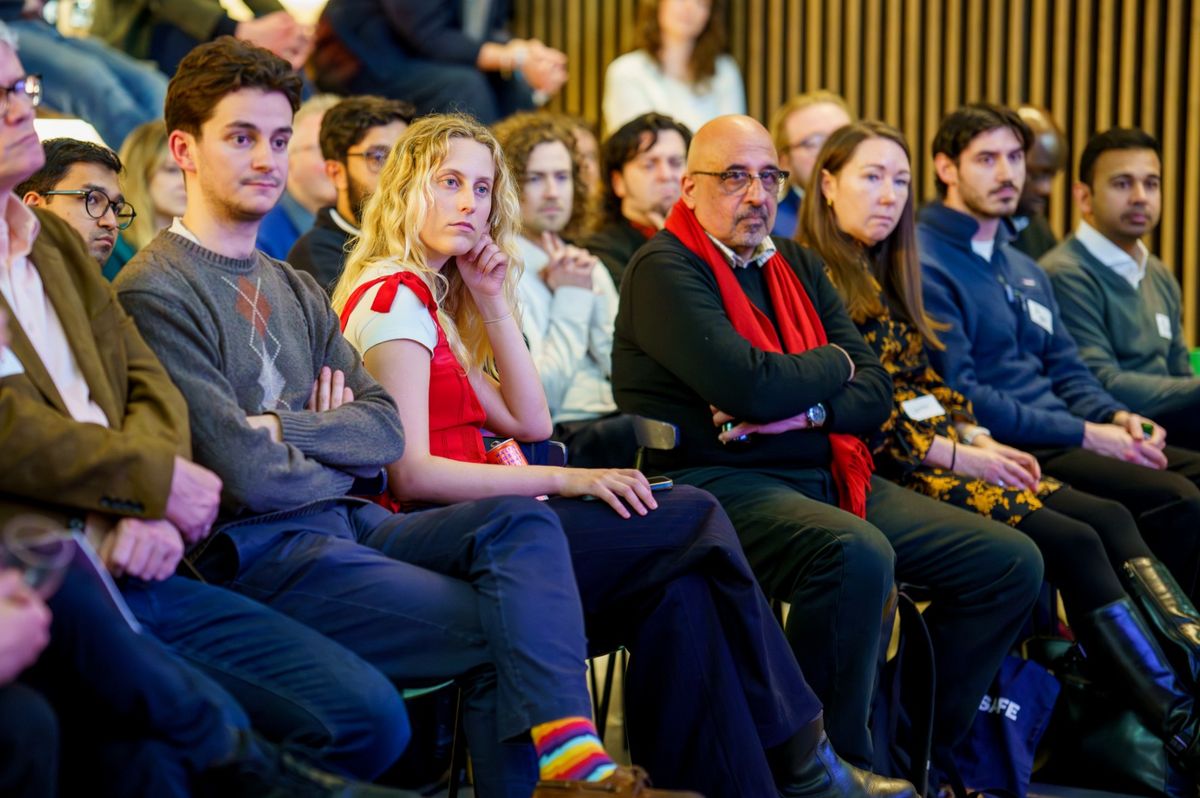
The first is whether they’re allowed to share this information at all. What’s the legal basis?
The second is how to do it without creating a horrendous operational burden, while meeting their duties around data minimisation and information security.
A big part of our work at Venne is helping organisations overcome these barriers.
We help them understand the legal basis for sharing fraud data, put the right safeguards in place, and make it part of their day-to-day work without adding unnecessary complexity.
There is strong support from regulators for more data sharing to prevent fraud. But knowing that it’s encouraged and knowing how to do it safely are two different things.
This is an important part of the service, and something the legacy networks have often overlooked.
Welcoming new professionals and institutions into this world for the first time is how we all learn and stay safer.
When I helped build the UK’s coronavirus contact tracing app during the pandemic, we thought of it as a kind of digital herd immunity.
By working and acting together, and sharing information in the right way, we could keep ourselves and each other safer than we could alone.
These days, at Venne, we’re building a very different kind of herd immunity.
And herd immunity just doesn’t work if there are great big swathes of the economy that aren’t participating.
Kayfabe
Professional wrestling has a useful concept called kayfabe.
Wrestlers play characters and follow pre-written storylines. They often still play these characters outside the ring, maintaining the pretence that the rivalries and events are real.
That’s kayfabe: keeping up the act, even when everyone knows it’s an act.
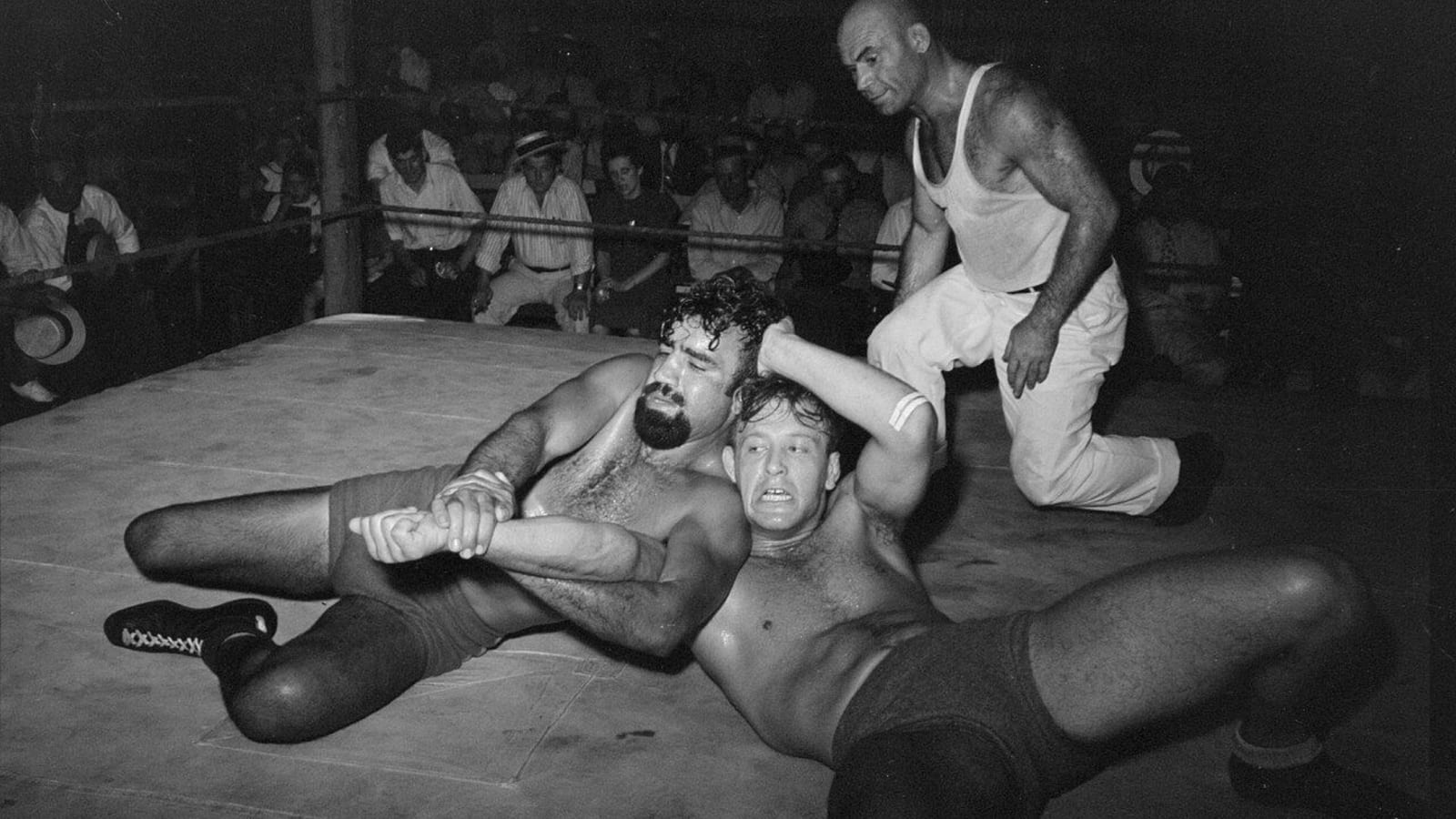
I think it’s a useful way to think about the enormous amount of security theatre in the world today.
The workarounds used by some lenders are a good example of how compliance and actually staying safe can be two very different things.
These firms already have proper KYC software. They verify identities. They follow the prescribed processes. And yet their teams may still need to find other ways to share intelligence and spot fraud that those tools can’t catch.
It should make us question how much of our approach to fraud prevention is actually effective, and how much is simply about demonstrating compliance.
We should be asking ourselves whether the fraud controls we use are genuinely keeping us safer, or whether they’re just kayfabe.
We need to keep each other safe.